AUTHOR: Ross Curtis, BV Capital President
Is Your Investment Portfolio Really Diversified?
When the stock market becomes increasingly concentrated, what you own matters more than ever. Today, the 10 largest companies account for about 40% of the S&P 500, and stock valuations remain elevated by historical standards. Earlier this month, the International Monetary Fund warned that an AI-driven market correction would impact financial markets. As a result, more investors are extending their investments beyond Wall Street to include passive private real estate, which offers a different set of performance characteristics.
Does that mean investors should abandon the stock market? Absolutely not. But it raises an important question: Is your portfolio as diversified as you think?
Private real estate offers a different set of investment characteristics. Unlike publicly traded stocks, real estate investments are tangible and:
- can generate rental income
- appreciate over the long term
- diversify returns through different underlying drivers
While real estate carries its own risks and is not immune to economic downturns, its inclusion in a portfolio may help reduce dependence on stock market performance.
And we believe few markets offer a more compelling long-term demographic story than Texas.
Why Texas Real Estate Deserves a Closer Look
According to the U.S. Census Bureau, Texas added 391,243 residents between July 2024 and July 2025, more than any other state. Houston and Dallas-Fort Worth led the nation in metropolitan population growth, adding 126,720 and 123,557 residents, respectively. That's nearly 250,000 additional residents in just two metropolitan areas in one year.
More people need more housing. But timing matters.
Following the historic wave of apartment construction and deliveries between 2023 and 2025, developers have dramatically reduced new construction. DFW's development pipeline has contracted for 12 consecutive quarters, while Houston's construction pipeline represents approximately 1.6% of existing inventory.
A reduction in future competing supply could create a more favorable leasing environment for well-positioned projects delivering in 2028 and beyond.
This is where BV Capital's investment strategy and execution experience matter most.
The Bridgeview Advantage
Through Bridgeview Real Estate, our vertically integrated development and investment platform, we have developed and invested in real estate since 2009. Our capabilities span site selection, underwriting, development, construction oversight, property operations, and investment management.
We believe this integrated approach provides greater visibility into project costs, schedules, leasing performance, and potential exit strategies. Importantly, we've operated through multiple real estate cycles.
The recent period of elevated construction costs, rising interest rates, and significant new apartment deliveries has reinforced a fundamental lesson: Successful investing requires more than a favorable market forecast. It requires disciplined underwriting, sufficient capitalization, and experienced execution.
BV'S current development initiatives:
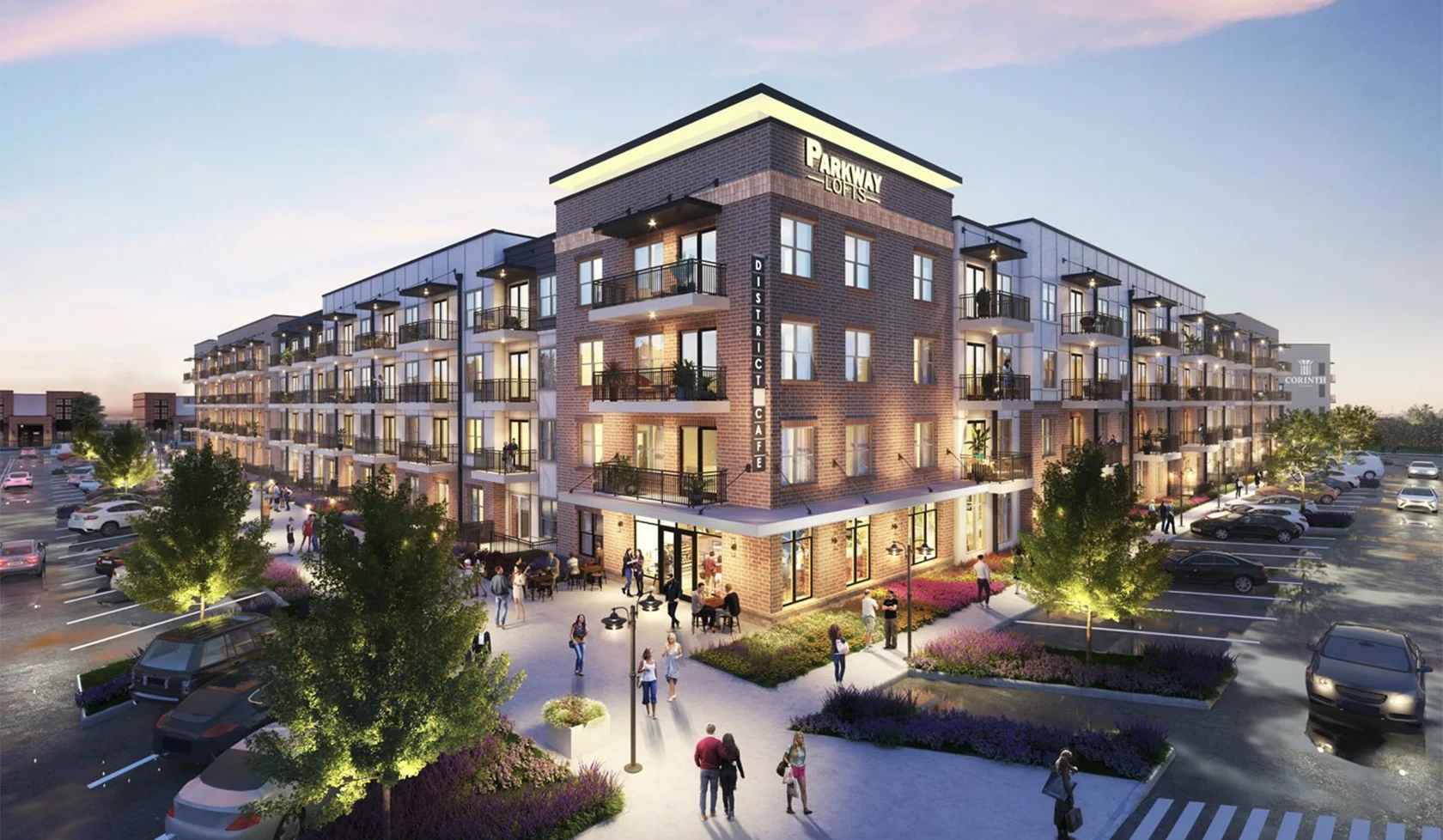

BV Parkway Lofts in Corinth, Texas, is a planned 294-unit apartment community along Interstate 35 at Corinth Parkway. Located in fast-growing Denton County, the development targets completion in 2028, when we expect significantly less competition from newly delivered apartments than the market has seen in recent years.
In Houston, BV Houston Heights Land is pursuing a site inside Interstate 610 for a planned 320-unit podium multifamily community. Construction is anticipated to begin in 2027, with delivery targeted for 2028, subject to final development schedules. Its location in an established, highly desirable urban submarket is central to our investment thesis.
These projects illustrate our approach:
- identify attractive locations in markets with strong underlying demand
- develop when competing construction activity declines
- deliver new housing as market conditions improve
investor considerations
There are no guarantees. Construction costs, financing, rent growth, and absorption all affect investment outcomes. But we believe our Texas market knowledge, integrated operating platform, and experience navigating previous market cycles position BV Capital to pursue this strategy with discipline.
The objective isn't to predict the next stock market correction. It's to build a more diversified portfolio with investments supported by different economic fundamentals.
At BV Capital, we believe accredited investors should seriously consider the combination of Texas population growth, declining future apartment supply, and experienced real estate execution.
The time to build for tomorrow's housing demand is before everyone else starts building again. That's the strategy we're pursuing today.