What shifting borrowing costs across acquisitions and development mean for multifamily real estate investors
Commercial real estate is highly sensitive to interest rates, but the effects are rarely uniform. A higher cost of capital can alter acquisition pricing almost immediately, while the consequences for ground-up development may unfold over several years through construction financing, project feasibility, future supply, and ultimately the competitive environment into which a property delivers.
That distinction has become relevant again as borrowing costs have moved higher. The Wall Street Journal recently reported that some commercial real estate buyers are reopening negotiations on transactions that were agreed to under cheaper financing conditions. In one apartment transaction the Journal cited, borrowing costs rose more than 60 basis points between contract and closing, contributing to a $600,000 reduction in the purchase price.
The industry generally refers to this as a retrade: the buyer returns to the seller seeking revised economics after the assumptions supporting the original price have changed. Retrades aren't new, but they remind us that interest-rate movements don't affect every real estate strategy at the same point in its life cycle.
ACQUISITIONS ABSORB RATE CHANGES QUICKLY
An acquisition begins with an agreed purchase price for an existing asset and income stream. Financing is usually part of the immediate transaction.
The cost of debt can rise between contract and closing, while the underlying property’s tenants, rent roll, and physical condition may remain unchanged. What changes is the amount and cost of capital available to buy it. That can alter the return available at the original price.
When rates move quickly, buyers may reduce leverage, contribute more equity, accept a lower projected return, or attempt to renegotiate the purchase price. Sellers, meanwhile, may remain anchored to values set in a different financing environment. That difference in expectations can slow transaction activity even when the underlying property is fundamentally sound.
This is one reason periods of interest rate volatility can produce relatively quiet transaction markets. The issue is often less a lack of interest in real estate than a temporary disagreement over what an asset is worth under a new cost of capital.
DEVELOPMENT ENCOUNTERS THE SAME ENVIRONMENT ON A LONGER TIMELINE
Ground-up development also faces higher rates, though the impact is distributed differently.
Construction debt becomes more expensive. Required equity may increase. Interest carry becomes more significant. Lenders can tighten proceeds or underwriting standards. A project that appeared economically viable under one set of financing assumptions may require changes when those assumptions move.
The difference is that a development is not purchasing an existing stabilized income stream. It is attempting to create one.
As a result, today's financing conditions matter alongside a second set of questions: what will the competitive supply environment look like when construction is complete, and what will renter demand look like when units actually become available?
That longer time horizon introduces considerable uncertainty. It can also separate the market conditions under which a project is financed from the conditions under which it eventually operates.
HIGHER FINANCING COSTS CAN INFLUENCE FUTURE SUPPLY
One of the more consequential effects of a difficult financing environment may not become visible until several years later.
When construction financing becomes more expensive or restricted, fewer proposed developments can move forward. This can delay projects and lead to others being redesigned, recapitalized, or abandoned entirely. That is a challenge for developers attempting to start projects today, but it also affects how much new inventory ultimately reaches the market.
Recent multifamily data illustrate that transition. CBRE reported that U.S. apartment completions declined 14% year over year in Q2 2026, while net absorption exceeded new construction for a second consecutive quarter. In Dallas-Fort Worth, Northmarq reported that the multifamily construction pipeline had fallen about 43% from its 2023 peak by Q2 2026, while quarterly demand was nearly twice that of new supply.
Those figures should not be read as a forecast that every new development will perform well. Rather, they better show how quickly the supply side of the market can change.
Physical real estate supply reacts slowly. A project denied financing today represents hundreds of units that never enter inventory to compete two or three years from now. Conversely, a large pipeline started during easier financing conditions can keep delivering long after those conditions disappear.
For development investors, that lag is important. Today's financing environment helps shape tomorrow's competitive environment.
A SMALLER PIPELINE DOES NOT REMOVE DEVELOPMENT RISK
It's easy to take a declining construction pipeline and turn it into an overly simple bullish argument, but that would miss several development-specific risks.
A property still has to be built at a workable basis. Construction costs have to be managed. The location has to attract residents. The unit mix has to fit actual demand. Lease-up must occur at rents and concessions that support the operating plan.
Local employment and population trends still matter. A reduction in future supply may improve one variable in that equation, but it does not settle the rest.
This is especially relevant in Sun Belt markets, where recent years have shown that strong long-term population growth and temporary oversupply can coexist. A market can remain attractive over a ten-year horizon while still experiencing several difficult quarters for rents and/or occupancy.
The more useful interpretation, therefore, is not that lower future supply makes development safer. Instead, supply risk itself is changing, and investors should understand how that interacts with the project’s timing.
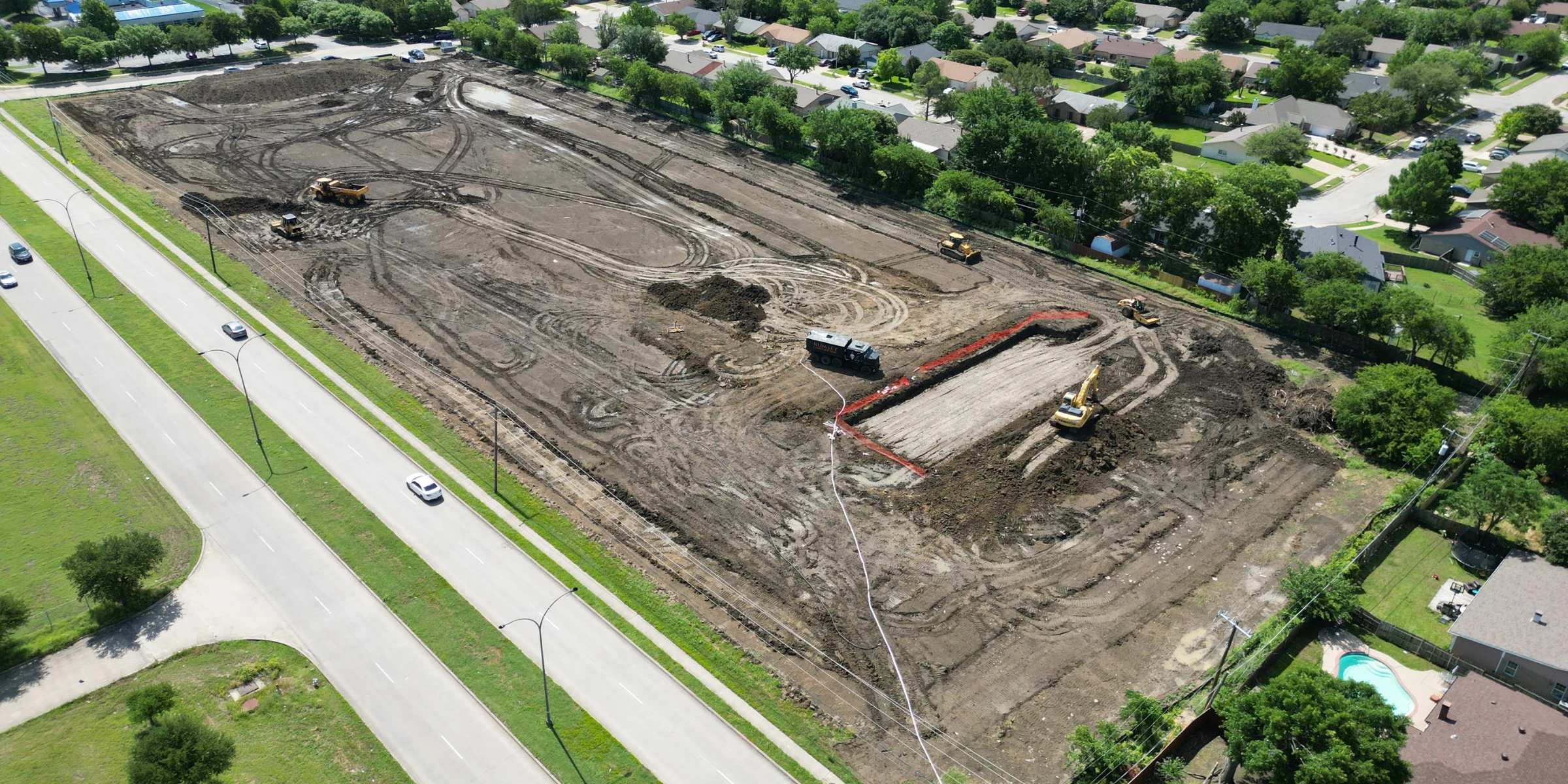
How Rate Volatility Affects The Developer, The Buyer, and The Owner Differently
The same rate move can create very different problems depending on where an investment sits in its life cycle.
- For an acquisition buyer, higher borrowing costs may affect the purchase price almost immediately if financing changes between contract and closing.
- For an existing owner approaching a refinancing, the concern may be whether new debt proceeds are sufficient to replace the old loan on acceptable terms.
- For a developer, the immediate challenge may be construction financing and capitalization, while the longer-term question is how much competing product will actually be delivered by the time the development opens.
None of these parties are insulated from higher rates. They simply transmit the pressure differently.
That distinction is useful because real estate headlines often describe “the market” as though every owner, buyer, lender, and developer is experiencing the same thing at the same time. In practice, the effects depend considerably on capital structure, timing, and strategy.
How should MULTIFAMILY INVESTORS handle higher rates
Higher rates can make projects harder to finance today. At the same time, fewer projects receiving financing today can reduce future supply. Meanwhile, existing apartment markets are still working through units that were started during an earlier period of stronger construction activity.
That creates a market in which near-term operating conditions and longer-term supply conditions can point in different directions.
An investor evaluating ground-up multifamily therefore has to consider both.
The question is not simply whether rates are rising or falling. It is whether the project's capital structure can withstand current financing conditions and whether the eventual delivery window appears likely to offer a reasonable relationship between new supply and renter demand.
That is a harder question than reacting to the latest interest rate fluctuation, but it is also more useful. Every real estate sponsor/syndicator should be able to answer this and explain how they prepared the project for that potential risk.
The current environment creates a tension worth watching
Higher interest rates create genuine pressure across commercial real estate, but the timing and form of that pressure vary considerably by strategy.
Acquisitions tend to reflect financing changes quickly because the purchase, debt, and existing income stream come together at closing. Ground-up development is exposed to the same capital markets, but over a longer period in which financing conditions can also influence how much competing supply ultimately gets built.
For multifamily investors, the current environment is therefore neither a simple warning nor an automatic opportunity.
This reminds us that the cost of capital affects more than today's transaction price. Over time, it also helps determine what gets built, what does not, and what the competitive landscape may look like when new properties eventually enter the market.
ARTICLE SOURCES:
Wall Street Journal — Commercial Real Estate Buyers Push for Retrades as Borrowing Costs Rise
CBRE — Q2 2026 U.S. Multifamily Figures
CBRE — U.S. Real Estate Market Outlook 2026: Multifamily
Northmarq — Dallas-Fort Worth Multifamily: Quarterly Demand Nearly Doubles New Supply in Q2 2026
Active-adult investment: multifamily ground-up development
BVCAP Belton Investors